Hard Water Stains in Northern Virginia: What Causes Them and How to Get Rid of Them
If you moved to Arlington from a softer-water region, you probably noticed it within a few weeks. A faint white film on the shower glass that won't quite wipe off. A chalky ring around the kitchen faucet base. Spots on glasses straight out of the dishwasher.
That's hard water. And in Northern Virginia, it's a fact of life.
The water in Arlington, Falls Church, McLean, and most of Alexandria comes through the Washington Aqueduct, which sources from the Potomac. The Potomac runs across limestone and dolomite beds, so the supply picks up calcium and magnesium along the way. Tests over the last decade have come back at roughly 5 to 9 grains per gallon depending on the season. Anything above 7 is considered moderately hard. Fairfax Water, which serves much of inner Fairfax County, runs in the same range. By the standards of the EPA's hardness scale, this region is firmly in the "you will see deposits on your fixtures" category.
The chemistry is simple. When tap water dries on a surface, the water leaves but the minerals stay behind. Each cycle adds a microscopic layer. Over a few weeks those layers stack into something visible. After a few months they bond chemically to glass, chrome, and porcelain.
Where hard water buildup shows up in your home
Limescale lives wherever water sits or evaporates. The usual hot spots:
- Shower glass: a foggy white film that doesn't wipe off with regular glass cleaner. The most common complaint in higher-end Arlington condos and townhouses with frameless glass enclosures.
- Faucet bases and aerators: a chalky white crust around the seam where the spout meets the deck. Worse on chrome than on brushed nickel because chrome shows it more clearly.
- Shower heads: clogged or weak spray patterns. The deposit forms inside the nozzles.
- Toilet bowls: a ring at the waterline that lightens with scrubbing but reappears within weeks.
- Dishwasher interiors: cloudy glassware coming out of a cycle, white film on metal racks.
- Coffee makers and kettles: white flaky buildup at the bottom that scrapes off in chips.
- Outside of kitchen faucets: mottled white patches even right after a thorough wipe.
If you have glass shower doors in a newer Clarendon, Rosslyn, or Crystal City apartment, you've probably watched them slowly turn into frosted glass over the first six months of living there. That's not the glass. That's mineral deposit bonded to the surface.
Why most cleaners do not work on it
Standard bathroom sprays are built as detergents. They lift soap residue and bacteria, which is what most people think they are dealing with. Soap scum and limescale look similar but are different problems chemically.
Soap scum is fatty residue from soap reacting with hard water. Limescale is the mineral component on its own. Breaking down limescale takes an acid. Detergents do not touch it.
The cleaning aisle has acidic cleaners, but most are either too weak (citric-based, fine for fresh deposits) or too aggressive (hydrochloric, hard on the surfaces around it). The right tool for most homes is something in the middle: distilled white vinegar for fresh buildup, oxalic or sulfamic acid for set-in deposits.
How to remove hard water stains yourself
For light, recent buildup, vinegar handles it.
- Spray distilled white vinegar directly on the affected surface. Wet it thoroughly.
- Let it sit for ten to fifteen minutes. The acid needs contact time to dissolve minerals.
- Wipe with a microfiber cloth in circles.
- Rinse and dry immediately. Drying is the step most people skip. Letting the surface air-dry just deposits another round of fresh minerals.
For stubborn rings on faucets and chrome, step up to Bar Keepers Friend. It's oxalic acid based and mildly abrasive. Apply the paste, let it sit five minutes, scrub with a non-scratch pad, rinse.
For glass shower doors that have gone past vinegar's reach, CLR Pro or a similar sulfamic acid spray will work. Use it only on tile, ceramic, glass, and stainless. It will etch natural stone, marble, and aluminum if you put it on the wrong surface, so spot-test in a hidden area first.
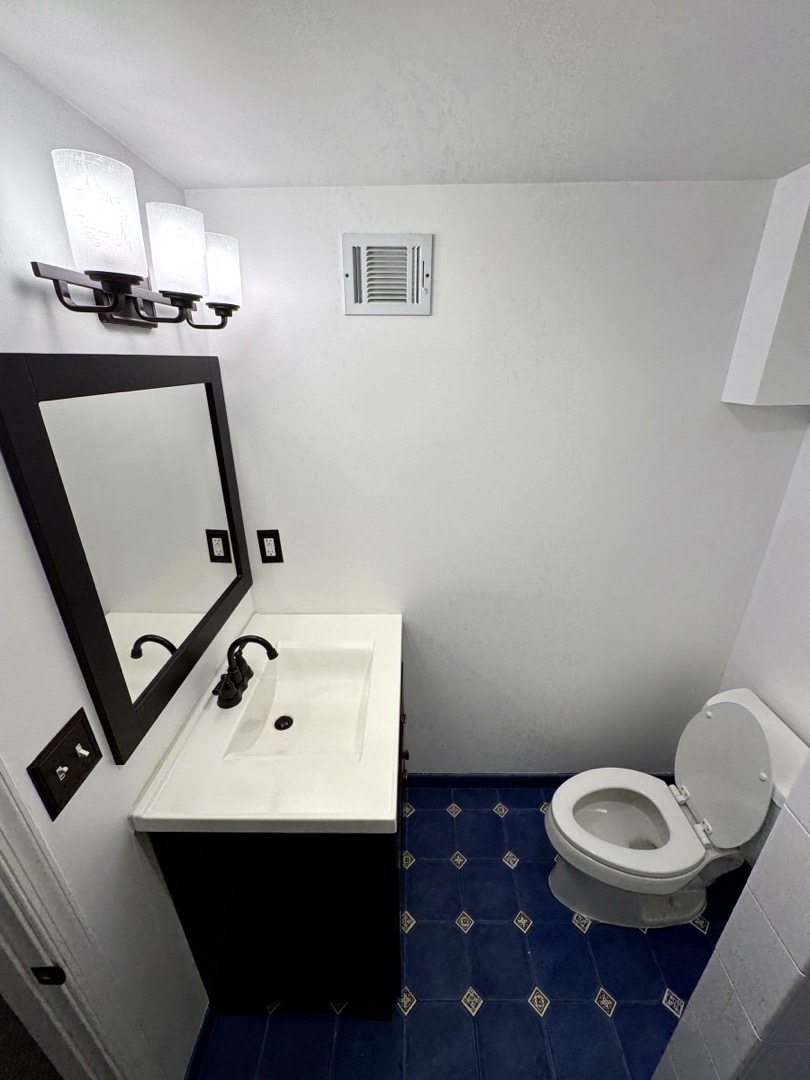
For toilet bowl rings, drop a pumice stone (the cleaning kind, not the kind you use on your feet) into the bowl and rub the ring directly. It removes the deposit without scratching the porcelain.
For dishwasher buildup, run an empty cycle with a cup of vinegar in a top-rack-safe container, then a second cycle with a quarter cup of baking soda sprinkled at the bottom. Once a month if you cook frequently.
What does not work, even though the internet swears by it
A few myths worth retiring.
- Bleach does nothing to limescale. It's a disinfectant, not an acid. Worse, it produces toxic fumes when mixed with vinegar or other acidic cleaners, so never combine them.
- Magic erasers wear down faster than they remove deposits and can scratch chrome and glass on harder buildup.
- Lemon juice is technically citric acid, but it's roughly a tenth the strength of vinegar by volume. Fine for prevention, useless on real buildup.
- Toothpaste has the wrong chemistry. It's mildly abrasive but neutral pH. Polishes a faucet, dissolves nothing.
Prevention that saves real time
The Arlington bathrooms we walk into that stay clean between visits all share one habit. After every shower, the homeowner pulls a squeegee across the glass and dries the fixtures with the same towel they just used. Two minutes per shower, and the glass stays clear for years.
If you cannot commit to that, a daily shower spray gets you most of the way. Method's daily shower spray is mild enough to use after every rinse and keeps minerals from anchoring. Spray, walk away, no wiping.
A whole-home water softener is the permanent solution, but installation runs roughly $1,500 to $3,000 depending on the system, and it needs utility-room space that many Arlington condos don't have. For renters it rarely pencils out. For homeowners staying long-term, it pays for itself across faucets, water heaters, and clothing wearing down more slowly. Worth pricing if you own a house in the area and have the space.
When it makes sense to call a cleaning service
Most ongoing hard water belongs in a routine you handle yourself. Outsource it when:
- You're moving into a place where the previous tenant didn't keep up. Glass is fully fogged or the faucets are crusted.
- You're moving out and you want your security deposit back. Move-out cleans always include limescale removal on glass, fixtures, and chrome.
- You haven't had a professional clean in six months or more and want a full reset.
Our deep cleaning and move-out cleaning services both include hard water removal on showers, glass, faucets, sinks, and toilets. We bring the acids we actually use on the job and give them the contact time most homeowners run out of patience for.
If you only need maintenance from here, a recurring cleaning service keeps buildup from forming in the first place. Hard water doesn't have a chance to set when surfaces get cleaned every week or two.
Common questions
Will hard water damage my fixtures permanently? Not on chrome, ceramic, glass, or porcelain if you address it within a few months. Softer metals like brass and unsealed natural stone can pit if mineral deposits sit for too long, so fast intervention matters more on those finishes.
Why does the buildup come back so fast? Because the underlying water hasn't changed. Removing the visible deposit doesn't stop new water from depositing more minerals when it evaporates. Routine is the answer, not a one-time scrub.
Is hard water safe to drink? Yes. The minerals are not harmful, and many people prefer the taste of moderately hard water to soft. The buildup is cosmetic and mechanical, not a health issue.
Do I need a water softener for my Arlington apartment? If you're renting, probably not. The cost rarely makes sense for a short stay, and most landlords don't allow plumbing modifications. Build a daily routine with a squeegee and a shower spray. That handles most of it.
Does Capitol Shine remove hard water buildup on every visit? Deep cleans and move-out cleans always include it as part of the scope. Standard recurring cleans address fresh buildup as part of the bathroom and kitchen pass. If you have serious set-in deposits, mention it when booking so we can scope the time accordingly.
Ready for a cleaner home?
Book online in 60 seconds. No contracts, no hidden fees, and $30 off your first cleaning with code FIRST30.
Book a Cleaning